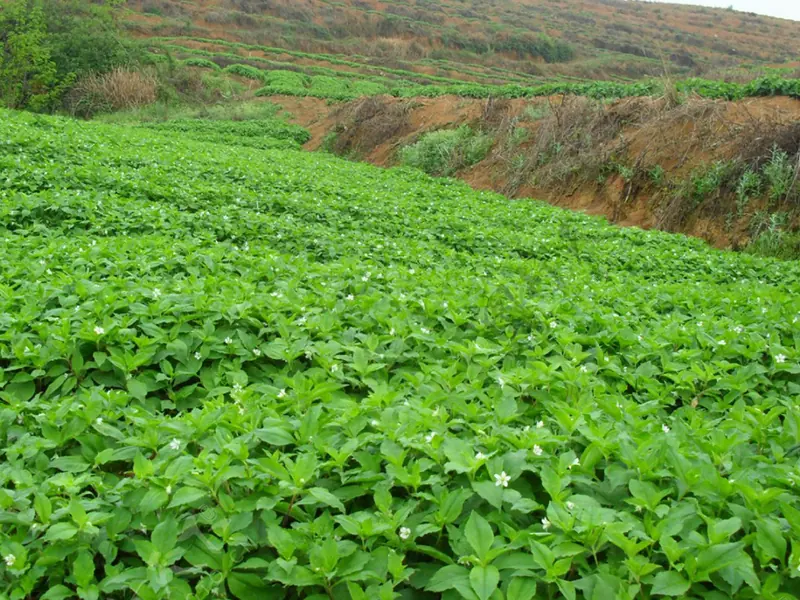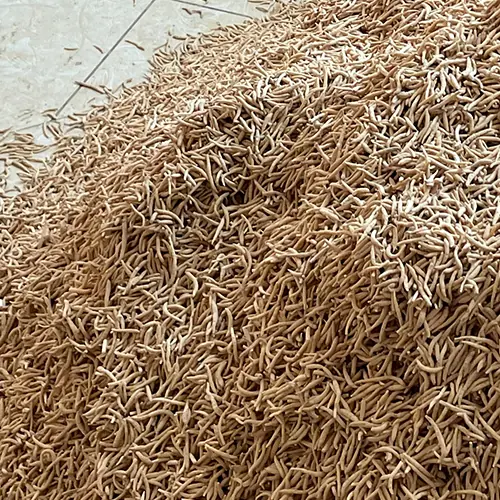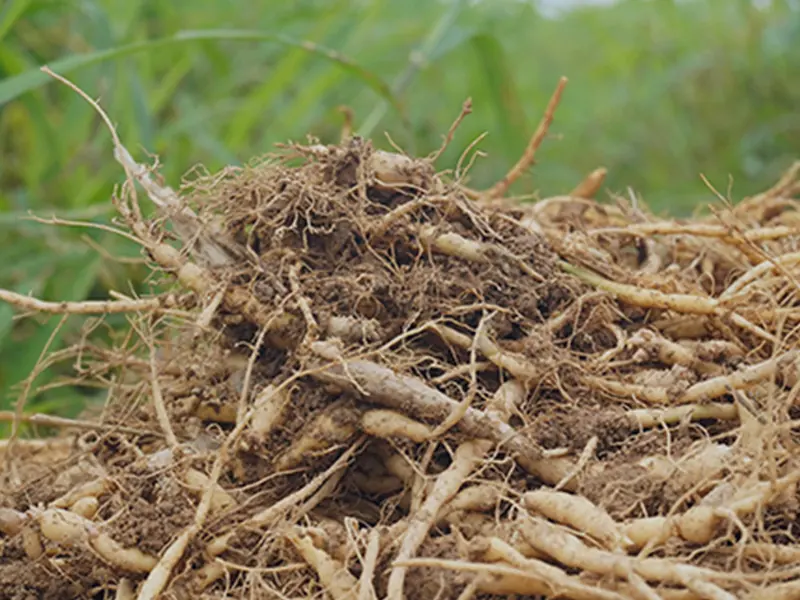
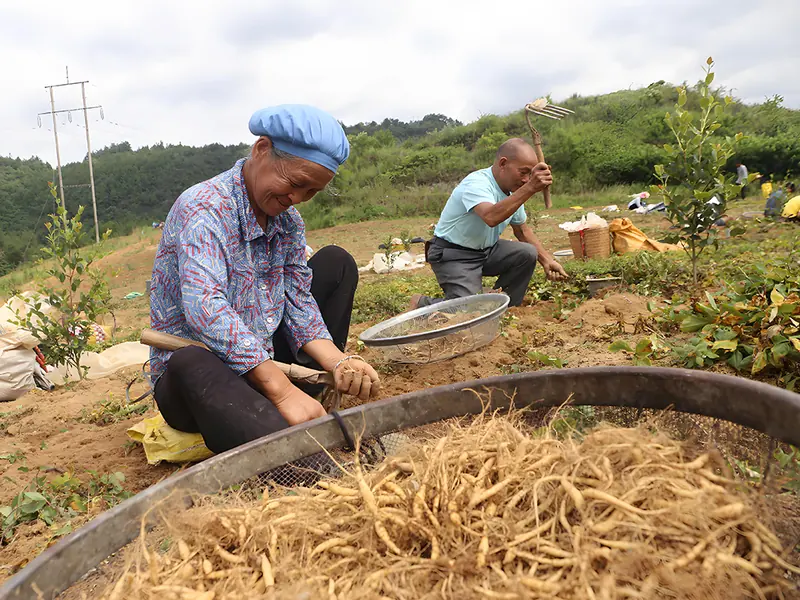
The weeks around harvest decide the quality of a whole trading year. Post-harvest handling of Pseudostellaria heterophylla is a straightforward sequence — but each step, done properly or carelessly, is visible in the finished dried root.
Digging
Harvest happens in early summer, when the above-ground parts wither. Plots are dug carefully — by hand or with mechanical assistance depending on terrain — to lift the fragile tubers without breaking them.
Cleaning
Fresh tubers carry field soil. They are cleaned soon after digging, typically by washing or dry cleaning, depending on the handler’s process. Gentle handling at this stage protects the skin and tip of the tuber, which buyers inspect later as a quality indicator.
Drying
Drying reduces the fresh root to stable dried material. Depending on weather and facilities, drying is done sun-assisted or with controlled drying equipment. The goal is a root that is dried through — not surface-dried over a damp core — because inadequate drying leads to mould and discolouration in storage.
Sorting
After drying, material is sorted: broken pieces, off-colour roots and foreign matter are removed, and roots may be graded by size and appearance. Sorting quality is one of the most visible differences between a professional supplier and a casual one — and a core parameter for ingredient processing intake.
Bulk preparation
Finally, the sorted material is packed in bulk — typically in lined bags or cartons with moisture protection — and labelled with lot information linking it back to the harvest. This is the point where traceability begins in practice: harvest season, plot and processing batch.
Ask for photos of the drying and sorting stage for your specific lot. A supplier with real process photos is a fundamentally different counterparty from one with only product beauty shots.
You can see each stage documented in our Growing Base journal, and read what buyers typically specify for bulk packaging.
Sources & References
- National standards platform (SAMR): GB/T 40136-2021 · GB/T 40137-2021
- Field documentation from our supply area: harvest, cleaning and drying photographs