
Stage 01
Land Preparation
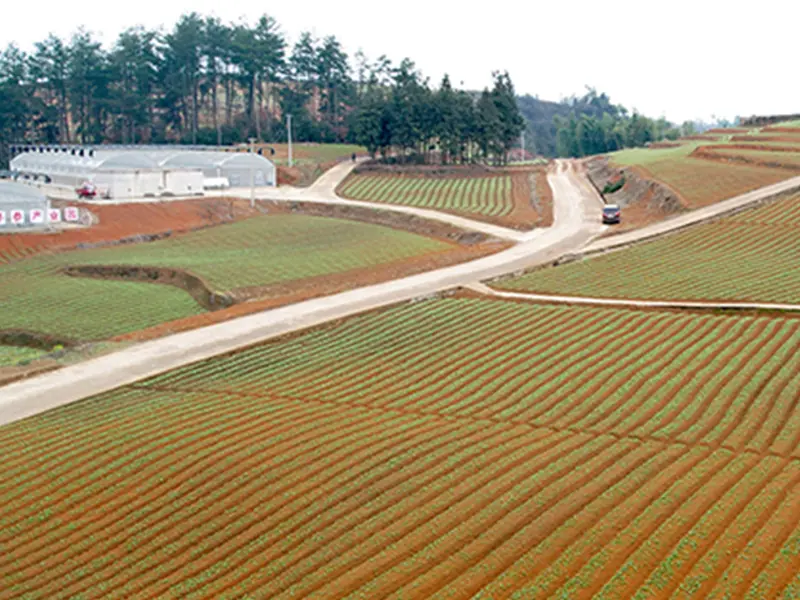
Plots are tilled and ridged ahead of the planting season, with rotation planned to protect soil condition in the mountain terrain.
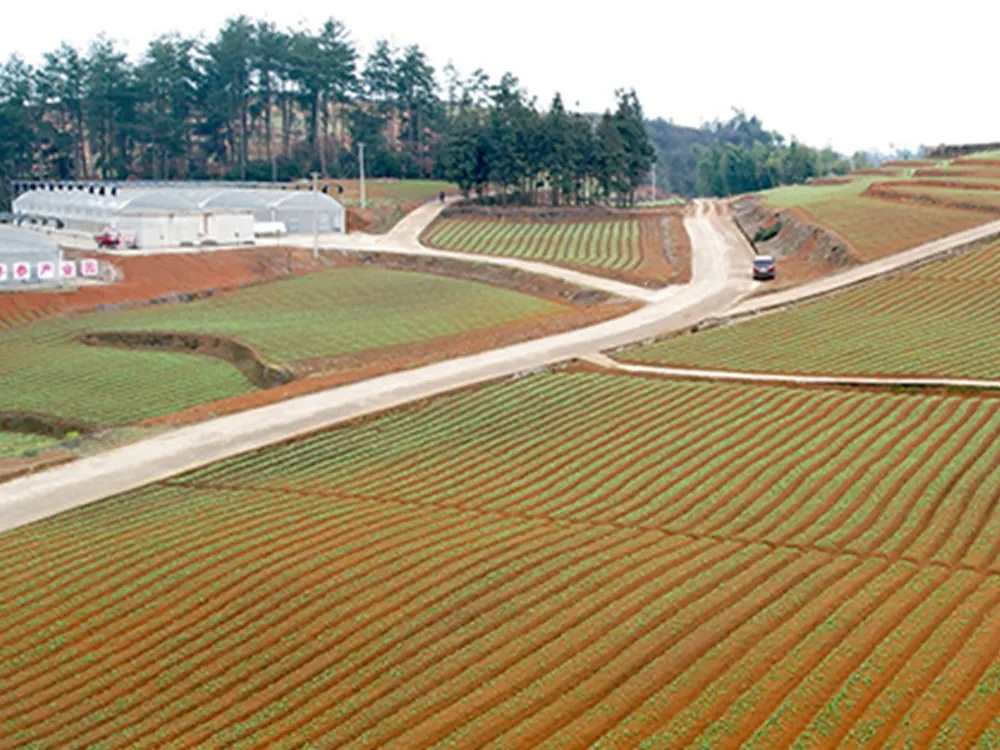
Grown at the source in Shibing — follow Prince Ginseng from the field through harvesting, drying and bulk preparation.
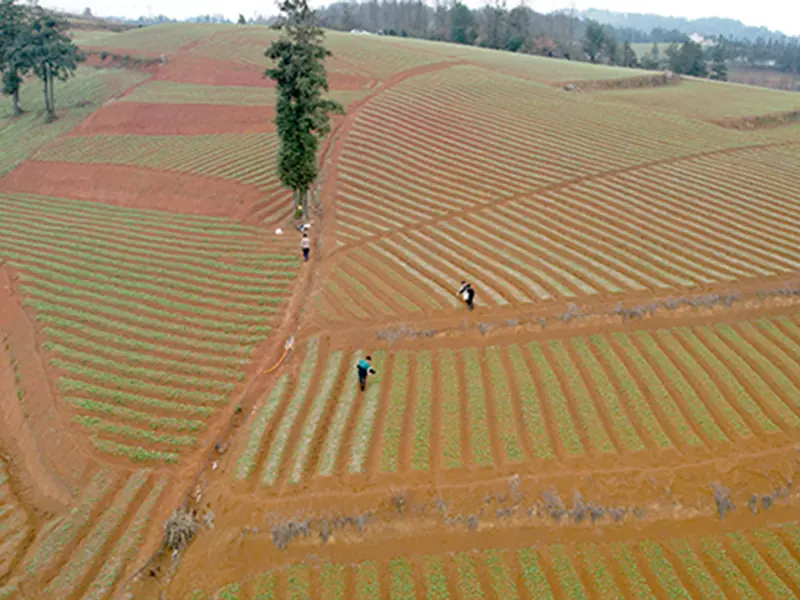
According to regional industry information, Pseudostellaria cultivation in Shibing County, Qiandongnan, Guizhou, dates back to the 1990s and has developed into a specialised county industry with growing networks, a trading centre and a standards system (GB/T 40136-2021, GB/T 40137-2021, DB52/T 991-2015). Shibing is the defined production area for the geographical-indication product “Shibing Tai Zi Shen” under the local standard DB52/T 991-2015.
Our supply is organised through growing plots in the Shibing area. We deliberately separate regional statistics from what we can evidence about our own supply chain — what we publish about our base is what our field records, photographs and videos can show.
Detailed base data (plot area, annual volume, storage capacity) is shared directly with serious buyers — request it via the quote form.
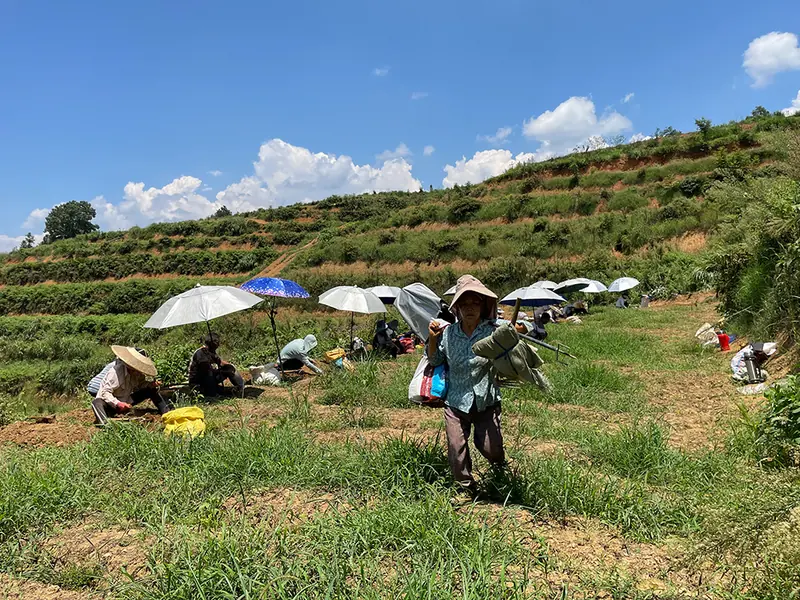
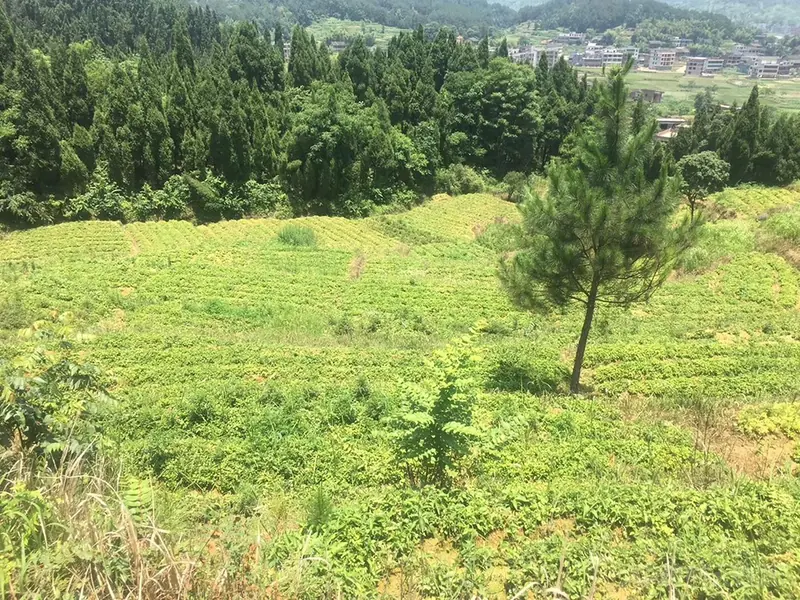
Slope and terrace plots at altitude in the eastern Yunnan–Guizhou Plateau: a mild, humid subtropical climate, acidic mountain soils and significant forest cover — conditions that suit Pseudostellaria’s growth cycle.
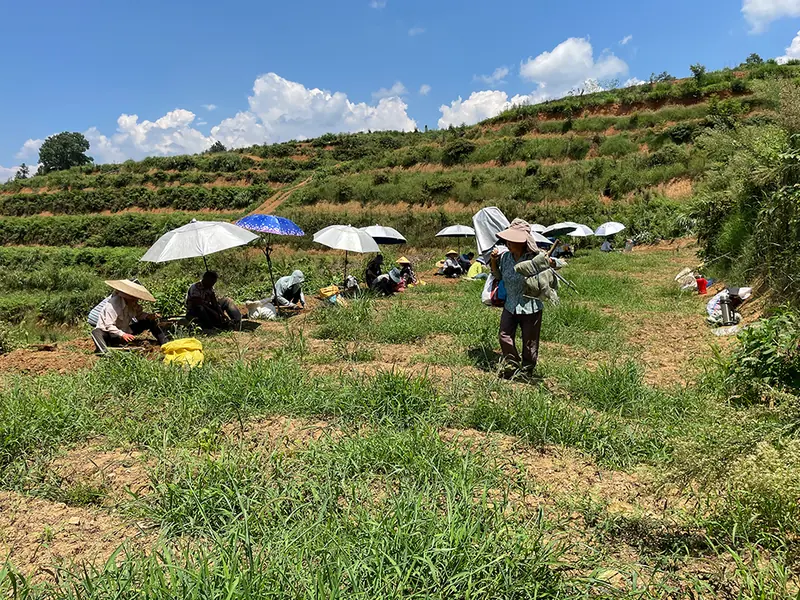
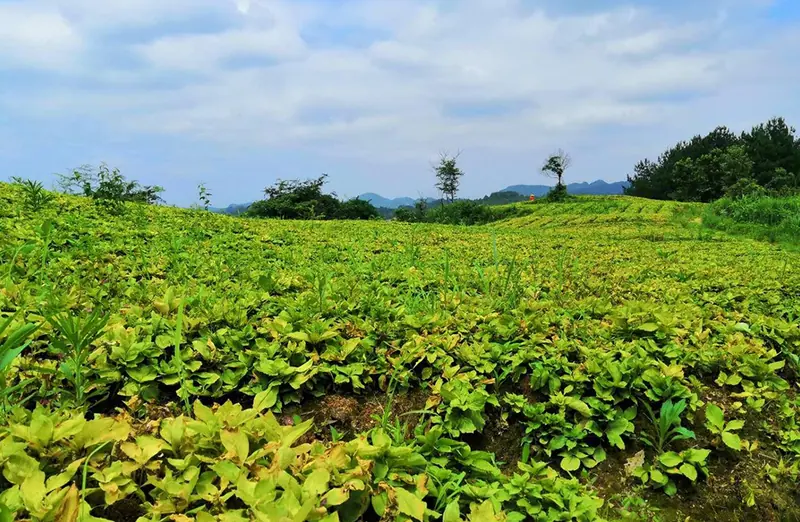
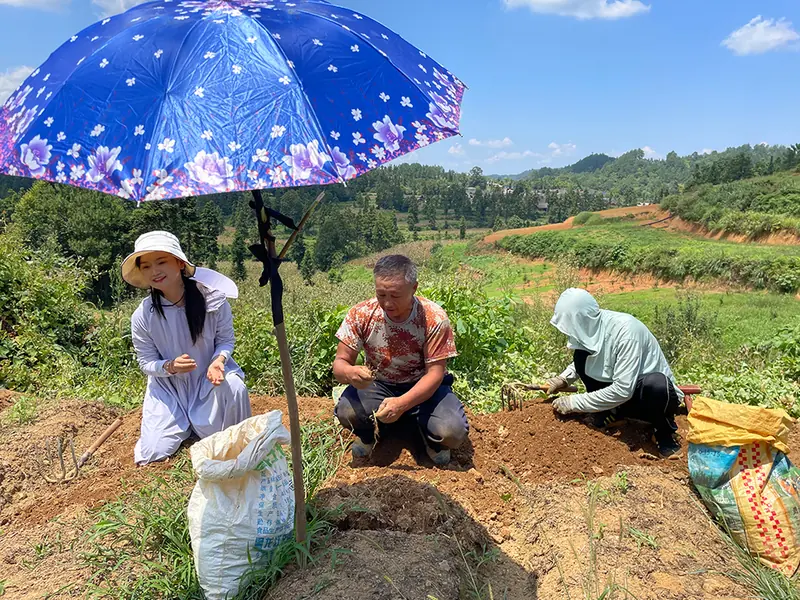
Each stage below is documented with real photographs from our supply area — this is what origin evidence looks like. Stages without a stage-matched photograph are shown text-only; field video is collected in the Base Videos section below.
Stage 01
Plots are tilled and ridged ahead of the planting season, with rotation planned to protect soil condition in the mountain terrain.
Stage 02
Propagation uses seed roots set in rows on the ridges in the cooler season; seed-root quality follows the GB/T 40137-2021 standard.
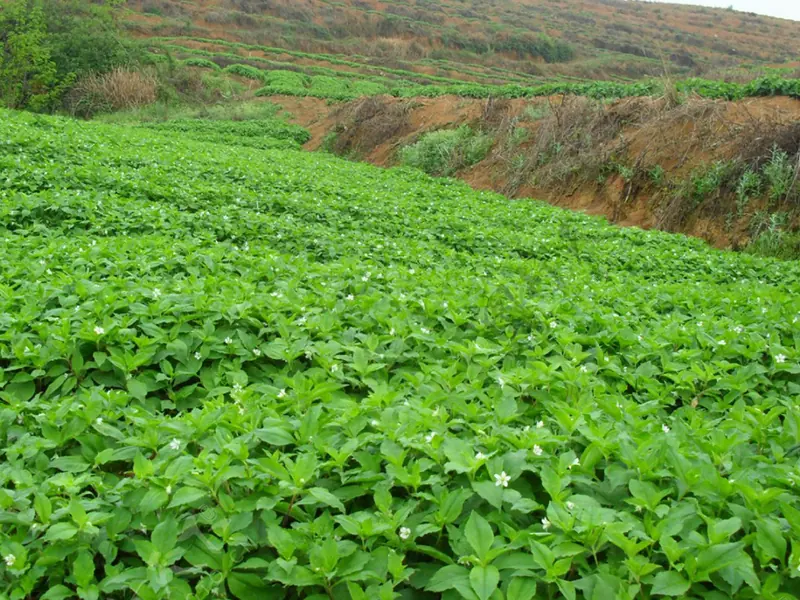
Stage 03
Weeding, drainage and plant-health monitoring through the growth period, with cultivation records kept under the standard framework.
Stage 04
The crop develops through winter and spring; the commercial value accumulates underground in the tubers.
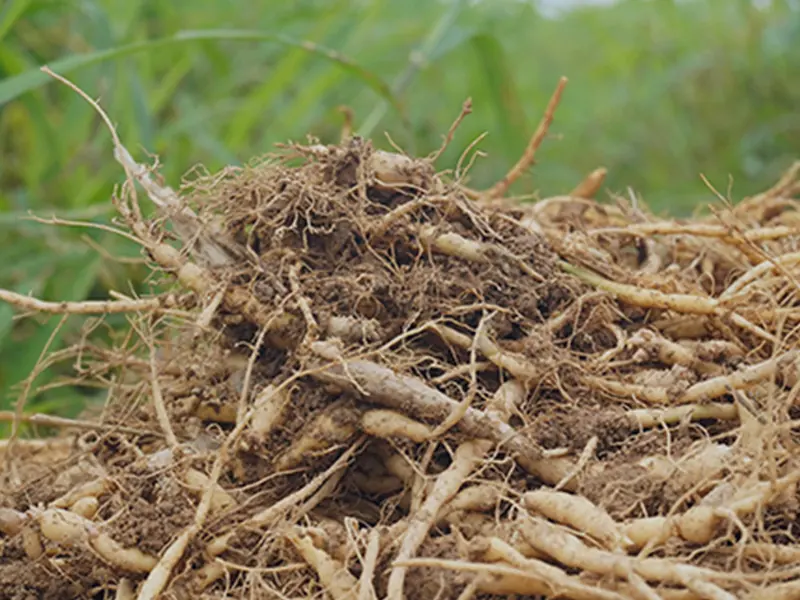
Stage 05
In early summer the plants wither above ground and digging begins — timed so tubers are mature but not over-stayed in hot, wet soil.
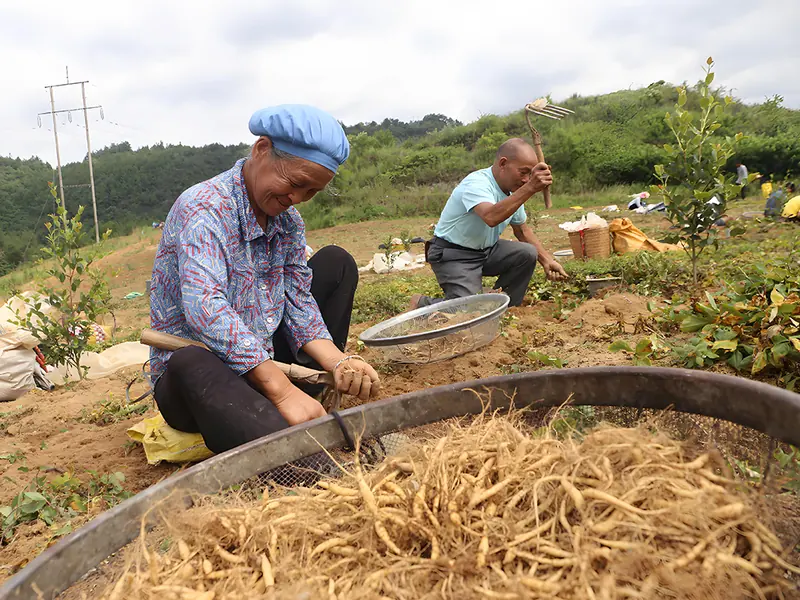
Stage 06
Fresh tubers are cleaned soon after digging, with gentle handling to protect skin and tips.
Stage 07
Dried through — not just on the surface — so the root stays stable in storage without mould or discolouration.
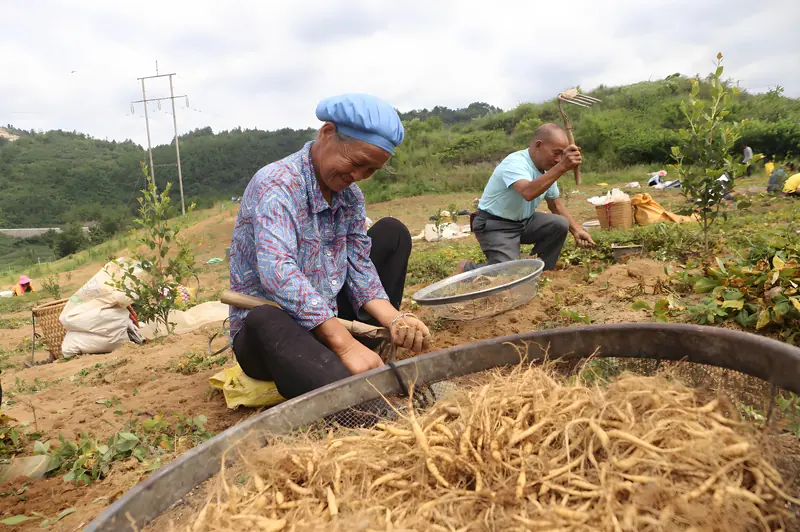
Stage 08
Broken pieces, off-colour roots and foreign matter removed; material graded by size and appearance.
Stage 09
Sorted material is kept dry and ventilated, off the floor and away from odours, until it is packed for order fulfilment.
Stage 10
Material for orders is packed in bulk with moisture protection and lot labelling linked to the harvest season.
| GB/T 40136-2021 | National standard — Technical specifications for planting pseudostellaria radix (太子参种植技术规范). Published 2021-05-21, in force 2021-12-01. |
|---|---|
| GB/T 40137-2021 | National standard — Tai Zi Shen seed and seed-root (太子参种子、种根). Published 2021-05-21, in force 2021-12-01. |
| DB52/T 991-2015 | Guizhou local standard — Geographical indication product: Shibing Tai Zi Shen (地理标志产品 施秉太子参). Published 2015-01-13, in force 2015-02-13; defines Shibing County as the GI production area. |
These standards are regional and national reference frameworks. Listing these standards does not imply that our company holds certification, registration or authorization under each standard. We reference them as context for cultivation practice, we display no certification marks, and we make no GI-mark usage claim.
Photographs from the 2025 season archive at our supply area, organised by growing stage. Capture dates are being confirmed against field records and will be added as verification completes.
Field footage from our supply area — 2024–2025 archive. Videos load only on click to keep pages fast.
Field records are the first link in the traceability chain — see how a lot connects harvest season, plots, processing and testing.