Not all Pseudostellaria is equal in the trade — origin shapes quality expectations, grading and price. Shibing County, in Qiandongnan prefecture of Guizhou province, is a recognised Prince Ginseng region in China. This article summarises the regional background that buyers should know.
Cultivation history dating back to the 1990s
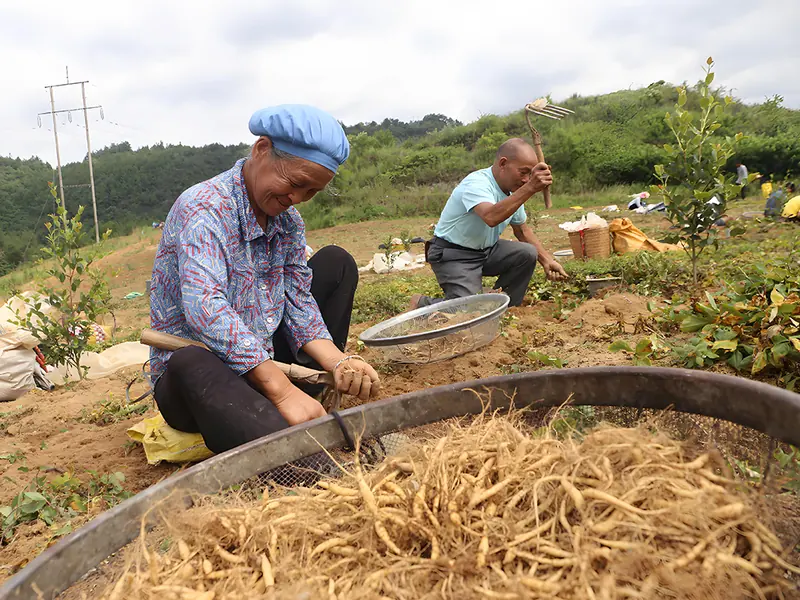
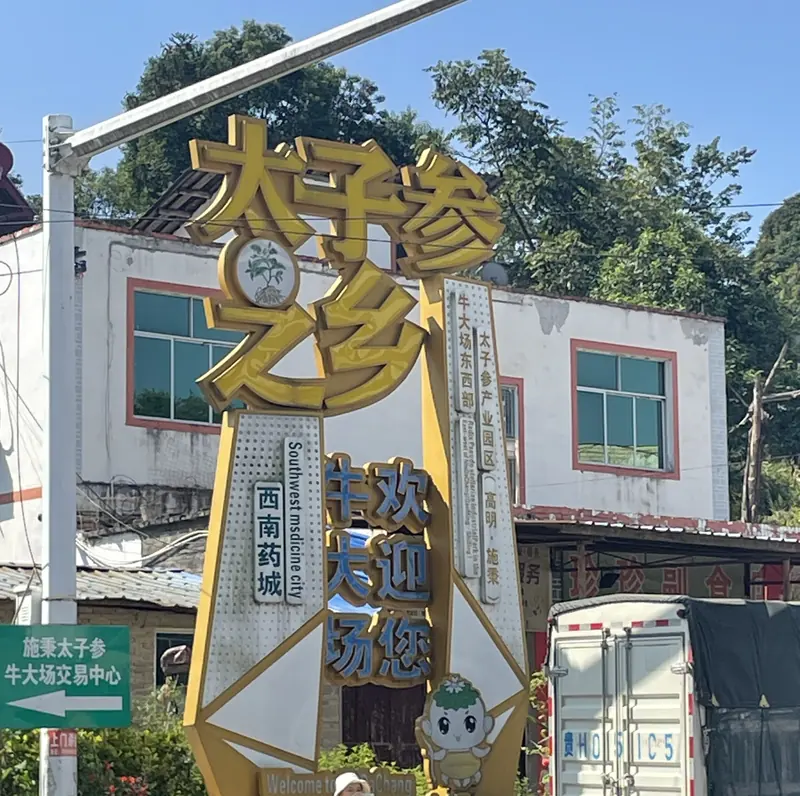
According to regional industry information, Pseudostellaria cultivation in Shibing began in the 1990s and has developed continuously since. Over roughly thirty years the county built a regional industry around the crop: cultivation across multiple townships, a specialised trading centre, and processing capacity. Shibing is also the defined production area for the geographical-indication product “Shibing Tai Zi Shen” under Guizhou local standard DB52/T 991-2015 — which is why the region is often called the “hometown” of Tai Zi Shen.
Mountain environment
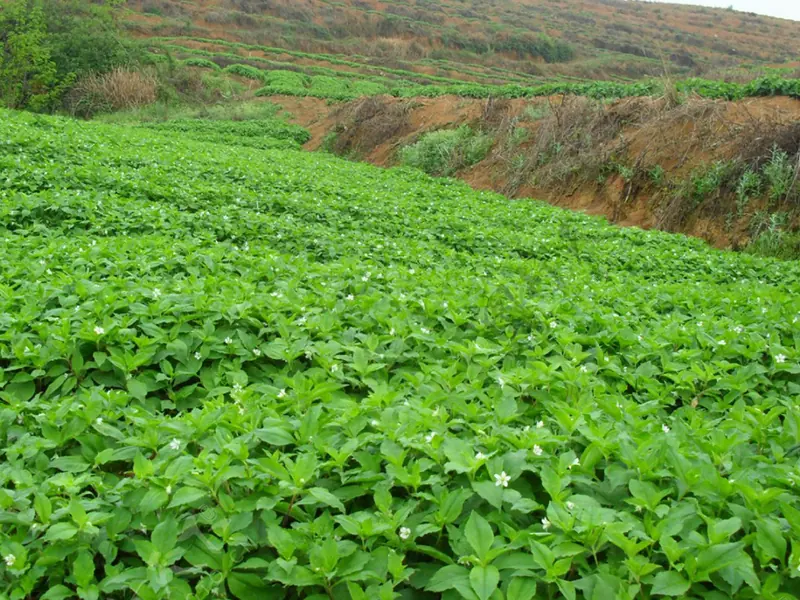
Shibing lies in the mountainous east of the Yunnan–Guizhou Plateau. Growing plots sit on slopes and terraces at altitude, with a mild, humid subtropical climate, acidic mountain soils and significant forest cover. These conditions suit Pseudostellaria’s growth cycle and are a core reason the region specialises in this crop.
Standards infrastructure
The region is backed by a formal standards system, which matters to B2B buyers:
- GB/T 40136-2021 — national standard for Tai Zi Shen cultivation technical practice (in force 2021-12-01)
- GB/T 40137-2021 — national standard for Tai Zi Shen seed and seed-root (in force 2021-12-01)
- DB52/T 991-2015 — Guizhou local standard for the geographical-indication product Shibing Tai Zi Shen
These standards give buyers a documented reference framework for cultivation and post-harvest practice, independent of any individual supplier’s marketing.
Regional facts are not company facts. County-level production statistics describe the whole region — they are not the output of any single base. Our own Growing Base page shows what we can evidence about our supply.
What this means for buyers
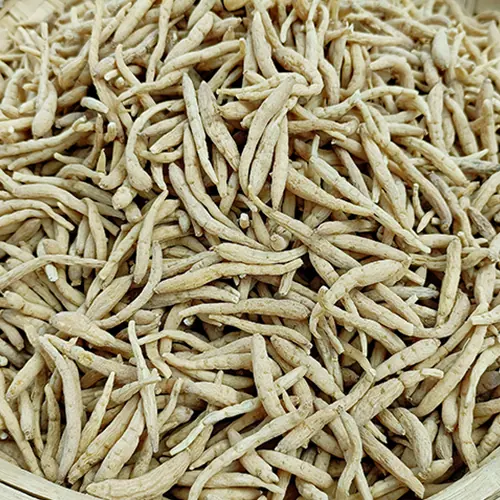
Sourcing from an established region brings three practical advantages: a deep, experienced grower network; trading and processing infrastructure that handles seasonal volume peaks; and a standards system that makes quality expectations discussable in concrete terms. That is why we anchor our supply in Shibing and publish the evidence openly — see how the crop is cultivated and how it moves from harvest to dried root.
Sources & References
- National standards platform (SAMR): GB/T 40136-2021 · GB/T 40137-2021
- Guizhou local standard DB52/T 991-2015 “Geographical indication product: Shibing Tai Zi Shen”: national standards information platform
- Regional industry background provided in client project materials (production-area history since the 1990s) — county-level statistics are deliberately not published pending an official source