The name “Prince Ginseng” causes frequent confusion in international trade. Despite the word “ginseng”, Prince Ginseng has nothing to do botanically with Korean or Asian ginseng. This article summarises the differences buyers should know before ordering.
Different plants, different families
| Attribute | Prince Ginseng | Panax ginseng |
|---|---|---|
| Botanical name | Pseudostellaria heterophylla (Miq.) Pax | Panax ginseng C.A. Mey. |
| Family | Caryophyllaceae (pink family) | Araliaceae |
| Chinese name | Tai Zi Shen (太子参) | Ren Shen (人参) |
| Pharmacopoeial name | Pseudostellariae Radix | Ginseng Radix et Rhizoma |
| Plant part traded | Dried root tuber | Dried root (and leaf extracts) |
| Typical size | Small, slender tubers of a few cm | Large, often branched roots |
Different appearance
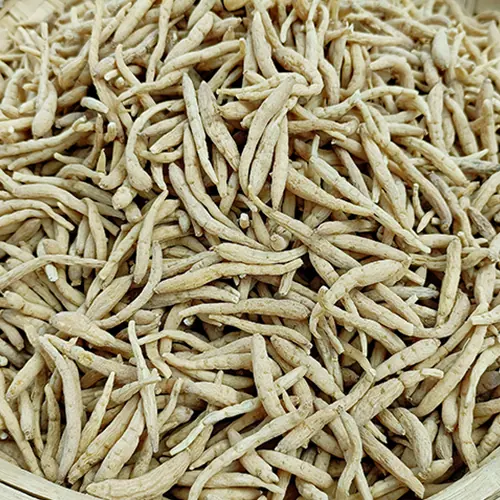
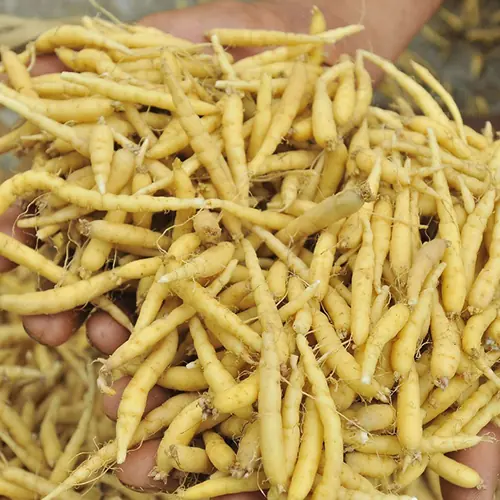
Dried Prince Ginseng root consists of small, slender, spindle-shaped tubers, usually pale yellow to yellowish-brown, with a fine, slightly wrinkled surface — see real material from our supply area. Panax ginseng roots are much larger, thicker and often forked. At a glance, the two materials are impossible to confuse — yet search results and product listings frequently mix them up.
Different traditional roles
In traditional Chinese materia medica the two materials occupy clearly different positions, with Tai Zi Shen traditionally described as a gentler root compared with Panax ginseng. Precise traditional descriptions and any modern research findings are matters for the buyer’s own regulatory and product-development assessment; what matters commercially is that they are distinct materials with distinct specifications, prices and trade conventions.
Buyer tip: always order by botanical name. “Prince Ginseng” should be written into contracts as Pseudostellaria heterophylla (Miq.) Pax to avoid any ambiguity.
A note on Codonopsis
Another common mix-up involves Codonopsis pilosula (Dang Shen), which is sometimes substituted or misrepresented in low-grade trade channels. Codonopsis is again a different plant from a different family (Campanulaceae). Reputable suppliers keep these materials strictly separated, and buyers should verify identity on the COA.
On this site, Prince Ginseng always means Pseudostellaria heterophylla. If a supplier offers you “ginseng” at Prince Ginseng prices — or vice versa — ask for the botanical name first, then verify it as described in our COA checking guide.
Sources & References
- Chinese Pharmacopoeia — Pseudostellariae Radix (Tai Zi Shen) monograph, Chinese Pharmacopoeia Commission (botanical identity, plant part and macroscopic description)