A large share of internationally traded Prince Ginseng (Tai Zi Shen, Pseudostellariae Radix) ends up in food, tea and beverage products rather than in pharmacies. For brands and co-packers, the buying questions are practical: which product formats the material fits, what to put in the specification, and which documents should follow the batch. This guide maps all three.
Where the material shows up in products
Across the trade, dried Prince Ginseng root appears in a small number of recurring product formats:
- Soup packs and soup bases — dried root packed alone or in multi-herb soup kits for retail and foodservice
- Herbal teas and tea blends — whole or cut root in loose blends and infusion bags
- Ready-to-drink herbal beverages — root or extract used as a declared botanical ingredient
- Home-style soup ingredient bundles — single-origin dried root sold with recipe cards for the gift and seasonal market
What these formats share is a visible-ingredient logic: the root itself often appears in the pack or the pot, so appearance, cleanliness and grade consistency are commercial features, not cosmetic details.
What form brands actually buy
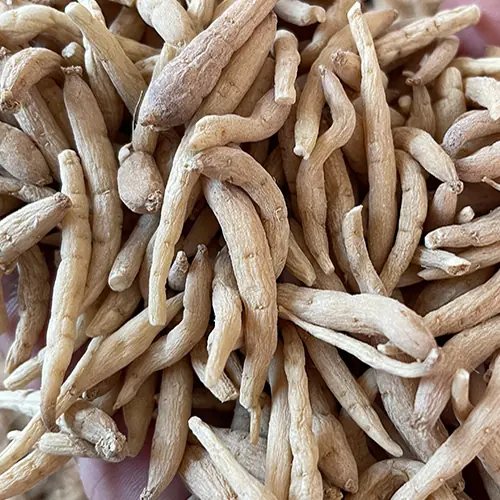
Most food and tea products are built on dried whole root — the primary trade form — while beverage lines more often work with extract. Cut material exists in the trade for infusion formats. Our own supply is dried whole root from the Shibing growing area; extract requirements are arranged through qualified processing partners rather than an in-house line. The trade-offs between forms are covered in our form-selection guide.
What to specify in your enquiry
- Botanical identity — Pseudostellaria heterophylla (Miq.) Pax written into the specification, with identification on the COA
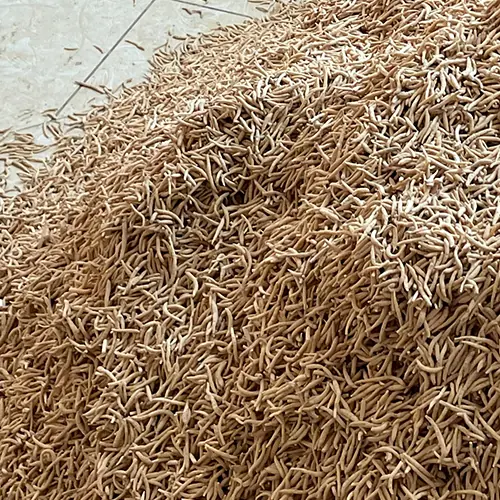
- Form and grade — whole vs broken proportion, sorting level, colour uniformity
- Foreign-matter tolerance — a defined threshold, not a verbal assurance
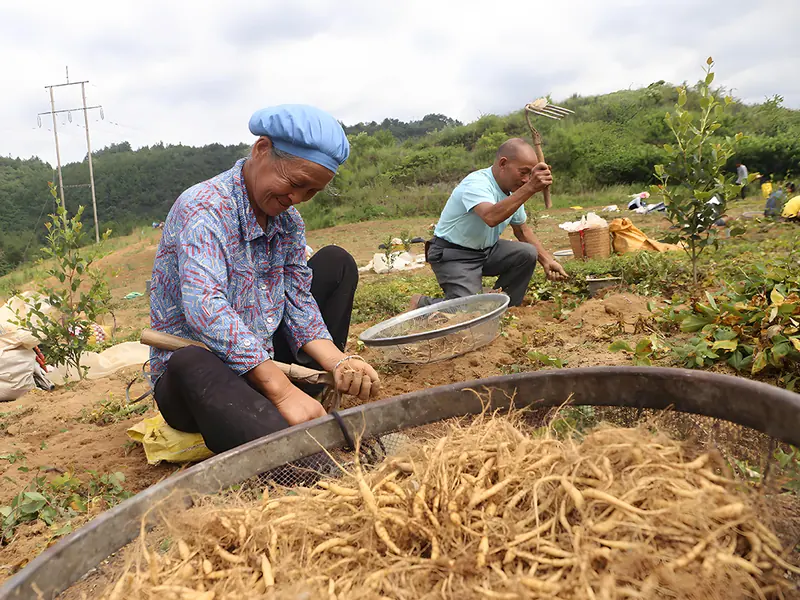
- Origin evidence — growing region stated plainly, backed by field records or photos
- Destination market — so documentation scope can be matched to your regulatory file
Food-use rules for Pseudostellariae Radix differ by market and product category. Regulatory classification in your destination market is your responsibility to confirm — we support with batch documentation, not regulatory promises.
Why origin ends up on the label
Brands building soup and tea lines increasingly print the origin story on the pack. A named growing region — such as Shibing County in Guizhou, the defined area for the geographical-indication product Shibing Tai Zi Shen — gives marketing something verifiable to say and gives QA a documented supply chain behind it. If you are scoping a product, tell us the format and target market through the enquiry form and we will advise on form, grade and documentation.
Sources & References
- Chinese Pharmacopoeia — Pseudostellariae Radix (Tai Zi Shen) monograph, Chinese Pharmacopoeia Commission (botanical identity, plant part and macroscopic description)